The Different Civil War Records We Cover
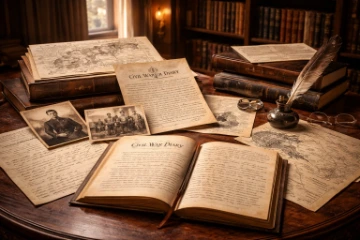
Our coverage includes:
- Historical military records
- Wartime family documentation
- Regional archives
- Civil War biographies
- Historical maps
- Preservation projects
- Military census records
- Local wartime history
- Historical photography and scanned military records
- Battlefield and community documentation
Here is a closer look at the different types of Civil War records and historical materials we explore.
Historical Military Records from the American Civil War
When researching individuals who served during the Civil War, military records are among the most important sources to consider. Muster rolls, service records, unit information, pension documents, and other military materials can provide details about a soldier's service and experiences, including information about a soldier's name, rank, unit, or place of service. Military correspondence and official reports can also provide a broader understanding of individual units, campaigns, and military operations.
Wartime Families and Regional Archives
The Civil War affected much more than the people who fought; it extended to the families and communities of these individuals as well. Some families experienced separation and loss, while some communities dealt with the social and economic effects of the conflict.
And of course, there are different documents and records like letters, diaries, family papers,s and local newspapers that show these experiences. A letter between a soldier and a family member, for example, can provide a personal perspective that an official military record cannot. A local newspaper can also reveal what was happening in individual communities and how residents experienced the war.
These more specific family and regional archives are especially valuable because they bring the national story down to the local level. And that helps researchers understand how the conflict affected particular families and communities with a higher degree of specificity and personalization.
Civil War Biographies, Maps, and Preservation Projects
Not every valuable historical source is an official record. There are certain Civil War biographies, historical maps, and photographs that might not be recognized as official records, but can provide important context about the people and places connected to the war. For example, biographies can show how soldiers, officers, civilians, and other individuals lived their lives and experienced the war. In the same vein, maps can show battlefields, towns, transportation routes, and military movements.
There are certain preservation projects that have taken efforts to protect these rather unofficial historical materials and places from being lost or damaged. At American Heritage Archives, we spotlight these efforts and projects and cover these resources, so that researchers and future generations can continue to study and learn from them.
Census Records and Local Wartime History
Census records taken around the Civil War era can also help researchers understand the people and communities living through the period. They can provide information about households, locations, occupations, family relationships, and changes over time.
When the records are compared from before and after the war, they can reveal how families and communities changed. That is, how people may have moved, households may have grown or declined, and how occupations or living arrangements may have changed.
Also, when these census records are combined with newspapers, family documents, and other local sources, they can help create a more complete picture of everyday life during and after the Civil War.
Historical Photography and Scanned Military Records
Photographs and scanned military records provide very valuable visual evidence. Historical photographs show soldiers, families, buildings, battlefields, and communities as they appeared at the time. Meanwhile, scanned military records make fragile historical documents like digital copies of service records, correspondence, pension documents, and other military materials easier to access and study.
Together, these materials help preserve Civil War history, and they provide a vivid visual connection to the past. They also back up written historical accounts with primary-source evidence.
Battlefield and Community Documentation
There were communities who actually lived where and around the different battlefields during the Civil War. And there are different documents connected to these places, including maps, photographs, local newspapers, historical accounts, and other materials. All these can provide more specific information about what actually happened and how the surrounding communities were affected.
The Role of Local Archives in Preserving Civil War History
Some of the most valuable Civil War materials can be found outside major national collections, such as local historical societies, libraries, museums, and community archives. These collections may include photographs, newspapers, letters, family papers, maps, and other materials that provide a distinctly local perspective on the war. They can also preserve stories that may not appear in broader historical accounts.
Local archives therefore play an important role in connecting national events to individual communities. They are evidence that the Civil War was not simply a series of battles recorded in history books. It was also an experience that affected families, neighborhoods, and communities across the country.
American Heritage Archives: Preserving American Civil War Records
At American Heritage Archives, we are committed to highlighting these records, preservation projects, and local historical resources. So if you are researching a Civil War ancestor, studying the history of a particular community, or simply interested in understanding the people and events behind the war, American Heritage Archives provides you with more than enough resources.