The Historical Documents We Cover
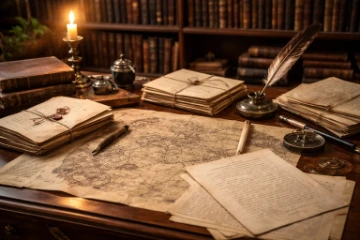
Our coverage includes:
- Handwritten records and early American documentation
- Historical newspapers, maps, and correspondence
- Census Records, obituaries, and Public Archive Collections
- Historical photographs and scanned community materials
- Local library and historical society collections
- Digitized and preserved historical records
- Forgotten regional histories and community documentation
Here is a closer look at the different types of historical documents and materials we explore.
Handwritten Records and Early American Documentation
Some historical documents are very valuable because of how closely they connect us to the people who created them. Handwritten letters, diaries, journals, personal papers, and early community records are good examples. These documents can provide first-hand perspectives on everyday life because they preserve details in the words and handwriting of the people who lived through a period.
Newspapers, Maps and Historical Correspondence
Historical newspapers can document local events, businesses, births, marriages, deaths, and other aspects of community life. Maps can show how towns, roads, settlements, and boundaries changed. And correspondence like letters can reveal relationships, migration, work, and important events.
Census Records, Obituaries and Public Archive Collections
Census records can show where people lived, their occupations, household members, and family relationships. Obituaries, on the other hand, can add details about relatives, residences, occupations, and important life events. Public archive collections bring these sources together to create a clearer picture of a person, family, or community.
Historical Photographs and Scanned Community Materials
Historical photographs provide visual evidence of people, buildings, neighborhoods, workplaces, and everyday life. Meanwhile, scanned photographs, newspapers, manuscripts, and other materials make fragile records easier to access without repeatedly handling the originals.
Local Library and Historical Society Collections
Libraries, historical societies, museums, and local archives preserve materials connected to the communities they serve. Their collections may include newspapers, photographs, family papers, maps, and other records that document local history.
Digitized and Preserved Historical Records
Historical documents can deteriorate through age, moisture, poor storage, and repeated handling. Digitization helps protect the information they contain by creating copies that can be accessed without constantly handling the fragile originals.
Forgotten Regional Histories and Community Documentation
Local records can uncover stories that have received little attention, like forgotten businesses and families, industries, and settlements. These materials help researchers look beyond well-known national stories and understand America's history at a more local level.
What Historical Documents Reveal About American Communities
When these different records are brought together, they can reveal much more than isolated facts. They can help researchers trace migration, understand how towns and neighborhoods developed, and explore work, family relationships, education, business, and local traditions.
A single record may answer one question, but several records examined together can reveal patterns that show how people and communities changed over time.
The Importance of Preserving Historical Records
Many historical records are irreplaceable. Once an original document is destroyed by age, water, fire, poor storage, or neglect, the information it contains may be impossible to recover. Preserving these materials helps protect the stories and knowledge they contain for future generations.
Historical records and archives are also valuable educational and cultural resources. Students can use primary sources to understand history, genealogists can use them to trace family connections, and researchers can use them to investigate communities and events. At the same time, archives help communities maintain a connection with their past and give future generations an opportunity to understand how earlier generations lived.
Discover America's History Through Historical Documents
America's history can be found in grand national collections, but it can also be found in a handwritten letter, a family photograph, an old newspaper, or a census record preserved by a local institution. Each document can provide another piece of the story.
At American Heritage Archives, we explore these materials to help readers better understand the people, communities, and events behind America's history. And by making archival information more accessible and highlighting records that might otherwise be overlooked, we help keep these stories available for future generations.